We are glad to Announce that RK Roofing has been Certified as FORTIFIED Company
Provider ID# R011743
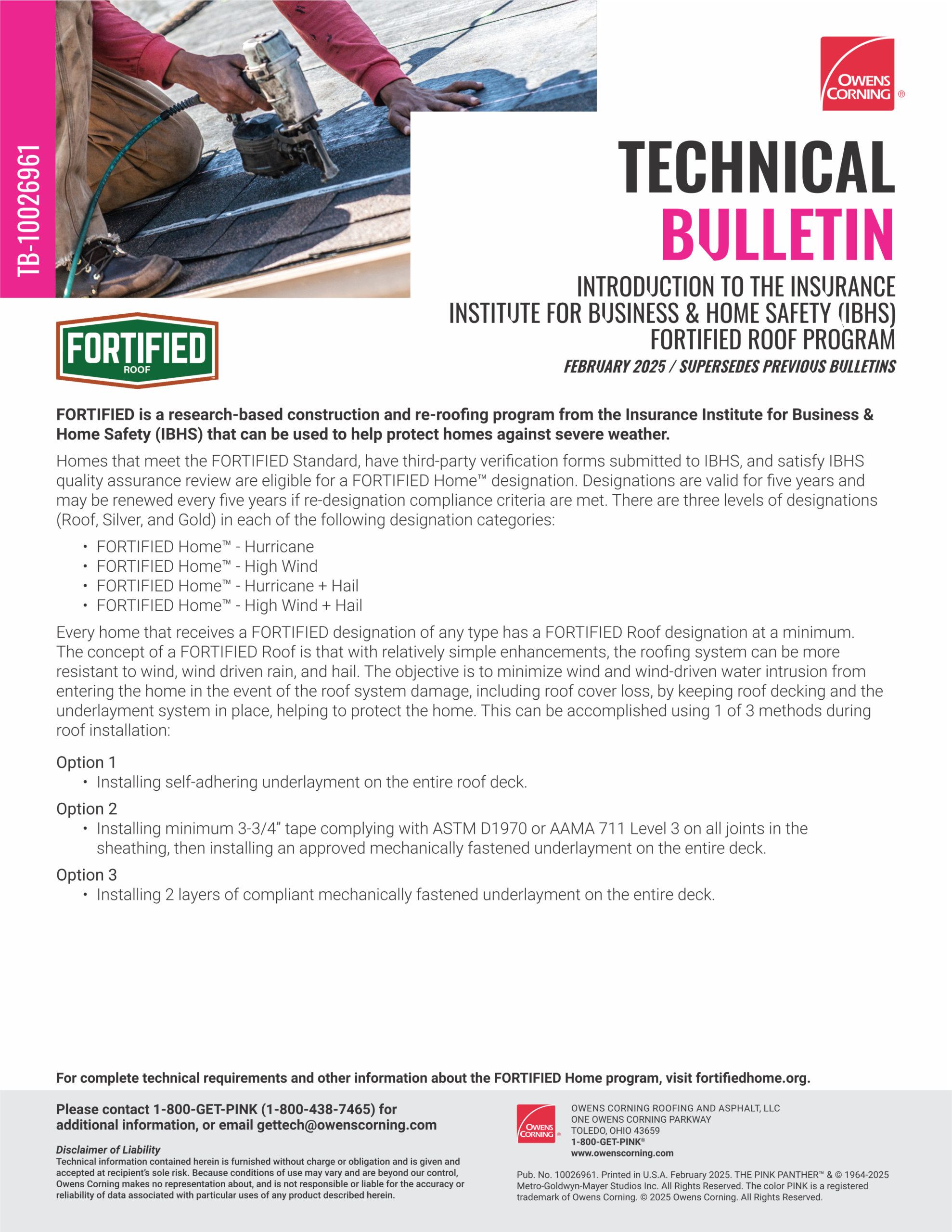
Building codes establish the minimum construction standards required to ensure the safety of those inside a home. Any reputable contractor will build your home or install your roof according to your local building code. However, even in areas where the most up-to-date codes are adopted and enforced, your home can be stronger. By choosing FORTIFIED, you are getting protection that goes beyond even the strictest code.
FORTIFIED is a voluntary construction and re-roofing program designed to strengthen homes and commercial buildings against severe weather such as high winds, hail, hurricanes, and even tornadoes.
When severe weather strikes, a FORTIFIED Roof keeps the wind and rain out, preventing a cascade of damage that can destroy your home and belongings. FORTIFIED Roof was specifically designed to strengthen roof systems featuring just about any type of roof cover (shingles, metal, tile, composite, low slope, etc.), giving homeowners flexibility when making their homes more resilient. No matter what type of roof you have, the following FORTIFIED Roof requirements will help ensure your home is ready for the next storm.
Stronger Edges
Roof damage often begins when wind gets underneath the roof edge and begins ripping it away from the home. To help protect this vulnerable area, FORTIFIED requires specific materials and installation methods, including a wider drip edge and a fully adhered starter strip, that when used together create a stronger system.
Sealed Roof Deck
If wind rips off your roof covering―such as shingles, metal panels or tiles―it exposes the wood beneath and allows water to pass through the gaps and enter your home. FORTIFIED requires roof decks to be sealed to prevent this type of water damage.
Better Attachment
Instead of common smooth nails, FORTIFIED requires ring-shank nails, installed in an enhanced pattern, to help keep the roof deck attached to your home in high winds. In fact, using ring-shank nails nearly doubles the strength of your roof against the forces of winds.
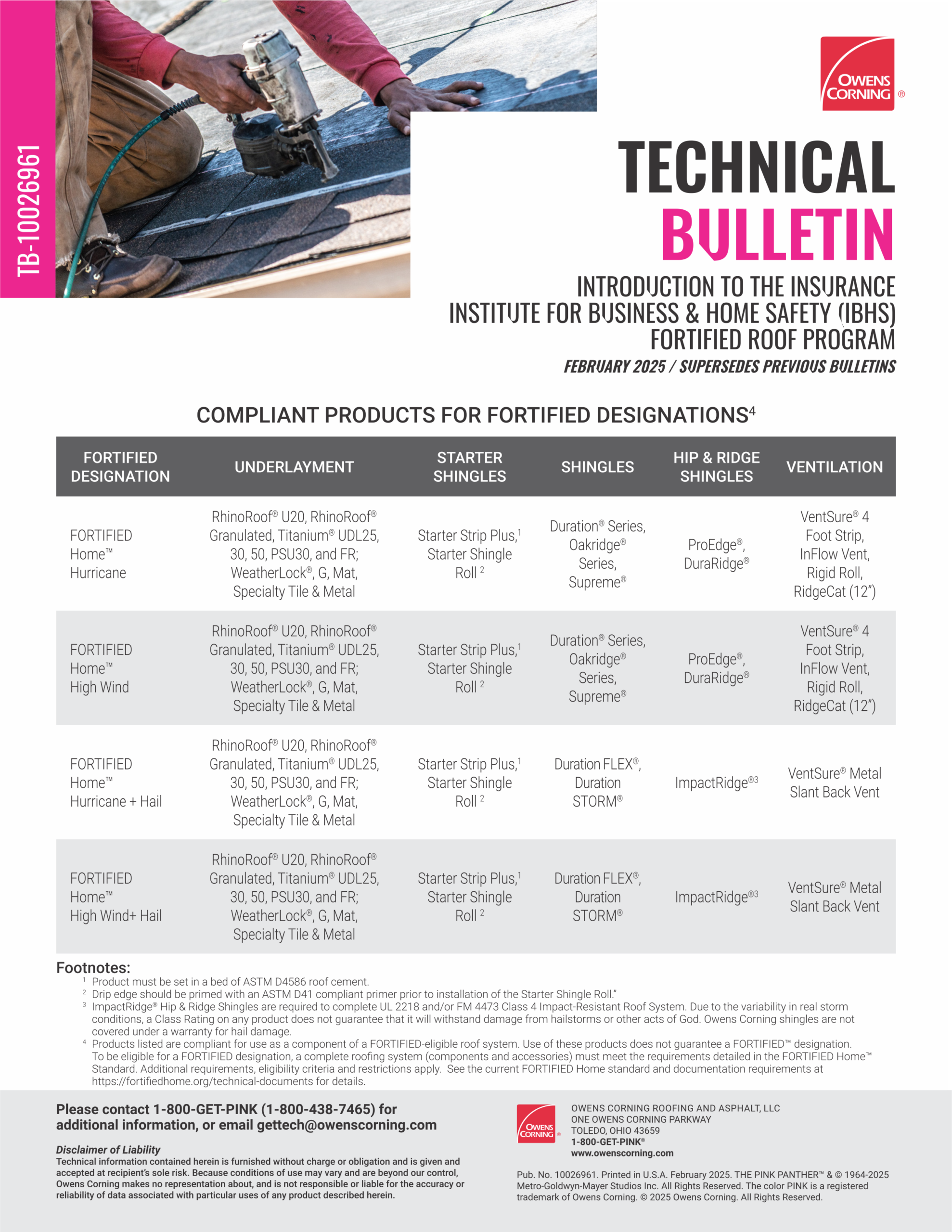
You can use just about any type of roof cover to complete your FORTIFIED Roof system. Shingles, metal and tile are the most common, and each has pros and cons, such as cost, durability, weathering, and longevity. To learn more about roof cover types, check out IBHS’s Roof 101. Whichever roof cover you choose, the product must meet rigorous testing and rating requirements to comply with the FORTIFIED Home standard.